It’s been quite a week for technology.
Microsoft 365 experienced service disruptions. FAA systems had problems that interrupted flights. United Airlines experienced its own outage, and banking customers encountered transaction delays at Chase and other institutions. We also saw a tanker collision on the Mississippi River, with reported steering problems under investigation.
That’s a lot to happen in just a few days.
There’s no established connection between these events, and several were technical failures rather than cyberattacks. But together, they raise an interesting question.
What happens when the technology we depend on simply stops working?
In cybersecurity, we often talk about the CIA triad: Confidentiality, Integrity and Availability. All three are important, but their priorities can change depending on what we’re protecting.
In operational technology and safety-critical environments, availability and integrity often receive greater emphasis. After all, protecting air traffic control information matters, but having accurate information and functioning systems is essential to keeping aircraft moving safely.
The same principle applies to everyday business operations.
When email, banking systems or critical applications become unavailable, the consequences extend well beyond an IT inconvenience. Employees can’t communicate, customers can’t complete transactions and organizations can struggle to deliver essential services.
We invest considerable effort in preventing cyberattacks and protecting information. But are we equally prepared to operate when an important system becomes unavailable?
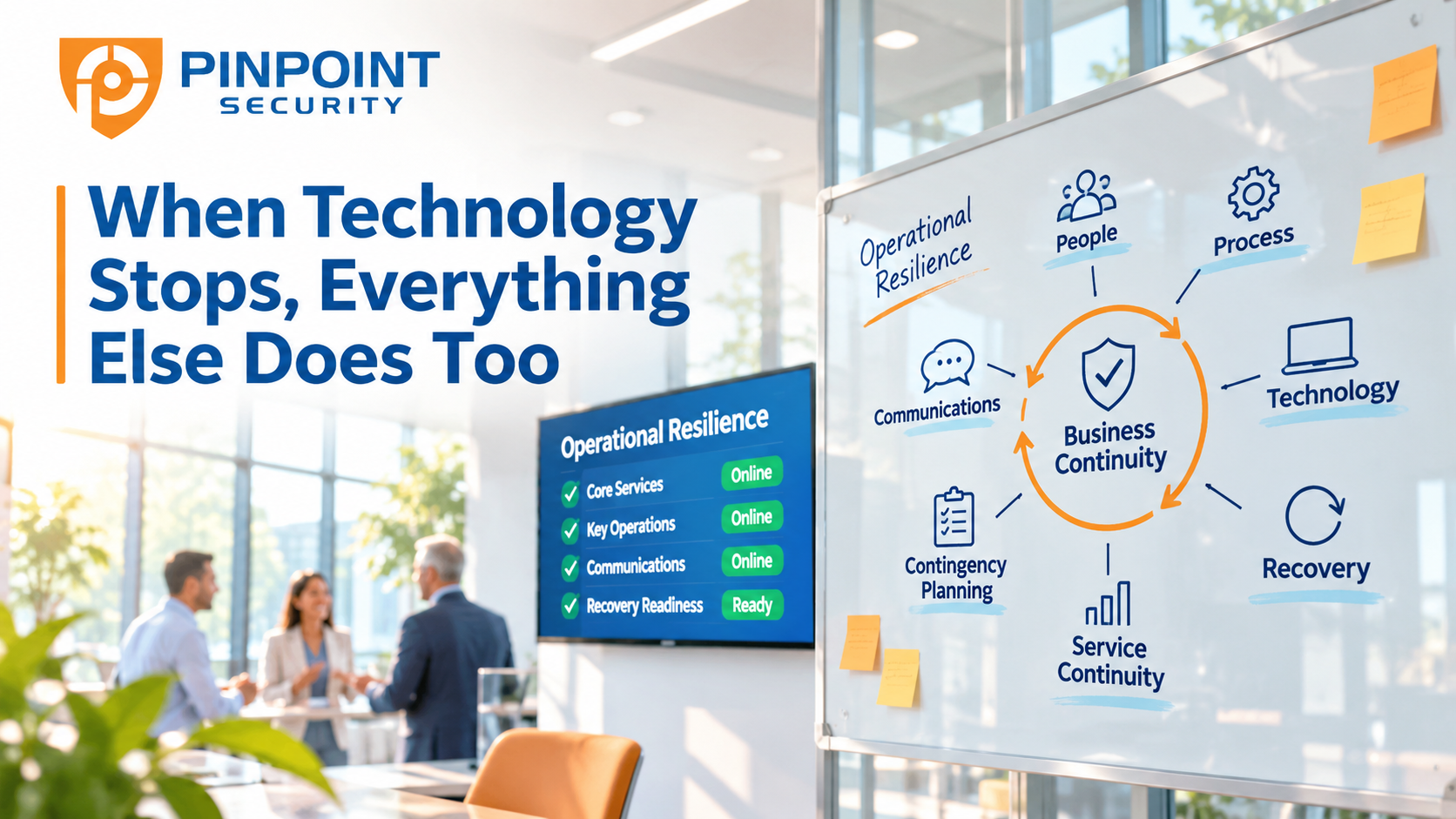
That’s where cybersecurity and operational resilience come together.
Infrastructure teams play a critical role in keeping systems available and restoring them when something fails. Cybersecurity brings another perspective by helping organizations understand the risks to those systems, identify critical dependencies, prepare for malicious disruptions and ensure recovery doesn’t introduce additional security concerns.
Neither discipline can do that effectively alone.
A useful starting point is identifying the technology supporting a critical business process. Consider the cloud services, network connections and third-party providers it depends on. Then imagine losing one of those dependencies tomorrow.
Can the business continue operating? Are alternate procedures documented? Do employees know what to do? Has anyone actually tested the plan?
Resilience isn’t just about recovering technology. It’s about helping the business continue functioning safely while recovery happens.
We can’t prevent every outage, software defect or equipment failure. But by bringing Security, Infrastructure and business operations together, we can better understand how failures affect the organization and prepare for the consequences.
Because protecting the business means more than preventing an attack. It means being ready to keep essential operations running when the technology we depend on isn’t available.
Tiffany Carberry
Pinpoint Security
Pinpoint Security